
Spring is sprung in Northern Wisconsin, and now is the time that everybody is shoveling the slop from their driveways, digging through the garage, and dusting off those bicycles. What do you need to do to get your bike ready for that first slow roll?
It’s normal for bike tires to lose pressure over time. Unlike your car tires, bike tires have relatively little volume. The oxygen atoms in that air are under pressure and will very slowly escape through the valve or through the rubber compound. The smaller volume your tire is, the more you’ll notice little bits escaping.
It’s a good idea to check your tire pressure before every ride, but you especially need to top it off after many months dormant.
If your tires go flat after just a day or two (or less), you probably have a small puncture in the inner tube or your tubeless sealant is dried out. It’s time for a patch, a new tube, or a sealant refresh.
Brakes are essential safety items on your bike. If you go, then you need to stop. Brakes are easy to overlook, but small problems can lead to catastrophic consequences either for safety or for repairs.
Make sure your brakes are ready to go at the start of the season so you are too.
Your chain is essential for making your bike propel forward. It’s also one of the pieces which wears just as much as your tires, and failure to maintain or replace your chain can lead to expensive replacements of other parts like derailleurs, cassettes, and chainrings. Keeping on top of chain maintenance is always worth it in the long run.
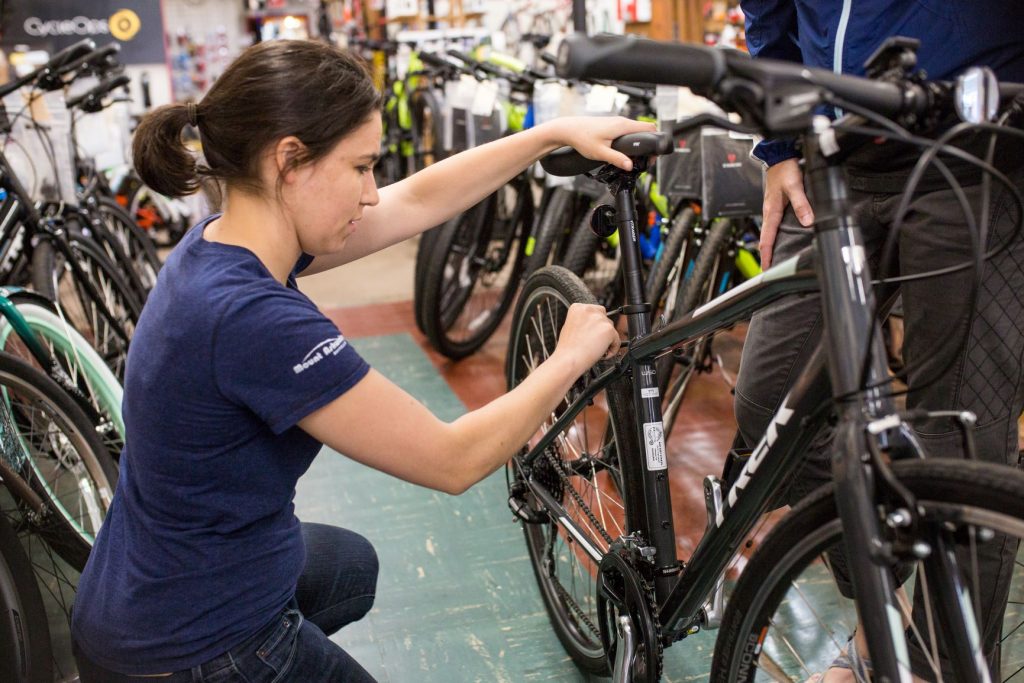
When all else fails – or if you’re just inclined to not do the check yourself – bring your bike into your local bike shop! Most shops like ours have tune up packages which cover the full run of checks, adjustments, and care that your bike needs to get ready for spring.

Alex grew up in the bike shop and the cycling community. After several adventures into college, grad school, into prairies and across seas, she returned to the bike shop to keep her community rolling. She also leads a citizen science non-profit, the Superior Rivers Watershed Association. Alex leads a weekly casual group ride May-October and is the mind behind our Just Riding Along newsletter.
One thought on “How to Get Your Bike Ready for Spring”
Nicole KriedemanPosted on 8:46 am - Apr 15, 2026
Thank you for the post. Good ideas for safety during these first rides! Can’t wait for our group rides.